Enamese Name Service will apply for the ICANN top-level domain extension .ENS! This marks a new breakthrough for the Web3 domain ecosystem.


In 2026, the global domain name system will reach a historic milestone—ICANN (Internet Corporation for Assigned Names and Numbers) will reopen applications for generic top-level domains (gTLDs) after a 14-year hiatus, with the application window officially opening on April 30th. Against this backdrop, Enamese Name Service (ENS) officially announced its full commitment to advancing the application process for .ENS as a top-level domain extension. This move is expected to completely break down the domain name barriers between Web2 and Web3, reshaping the value boundaries of decentralized identity and digital assets.
It is understood that ENS's core objective in this application is not simply domain name commercialization, but rather brand protection and ecosystem integration. For a long time, the ENS ecosystem has been centered around the .eth suffix. However, as Ethiopia's country code top-level domain (ccTLD), .eth is restricted by ICANN rules and cannot be natively resolved in Web2 browsers, posing persistent legal and sovereignty-related obstacles to its use and hindering seamless global access. .ENS, as a brand-new general-purpose top-level domain (gTLD), has no historical baggage and is more likely to pass ICANN approval. Once successful, users will be able to natively access yourname.ens on any internet-connected device worldwide, without relying on plugins or special tools, truly achieving seamless integration between Web2 and Web3.
Many people are unfamiliar with the ICANN top-level domain (gTLD) application process. It's important to know that ICANN's top-level domain application process is extremely demanding, complex, and time-consuming, requiring multiple rounds of review. The successful launch of ENS's application is inseparable from thorough preparation and professional planning.
First, we need to clarify the core premise: ICANN's new application window for general top-level domains (TLDs) is from April 30th to August 12th, 2026, a total of 105 days. Applications submitted after this period will not be accepted, which is a key reason why ENS is urgently pushing forward with the application process. According to ICANN's official rules, TLD applications require six core steps, each with strict review standards. Problems at any step can lead to application failure.
Step 1: Application Submission (April 30th - August 12th, 2026). Applicants must submit their applications online through ICANN's designated TLD Application Management System (TAMS), answering 225 relevant questions covering core aspects such as organizational finances, string information, and operational plans. They must also submit supporting documents and pay the basic assessment fee of US$227,000 within 7 days of the application window closing.
Step 2: Administrative Completeness Check (August - October 2026). ICANN will conduct a completeness review of all submitted applications, focusing on the completeness of application materials, correct formatting, and timely payment of the assessment fee. If the materials are incomplete or do not meet the requirements, they will be rejected and requested for supplementation. In severe cases, the application may be disqualified.
Step 3: String and Applicant Assessment (after October 2026). This is the most crucial step in the application process, divided into string review and applicant review. String review mainly assesses whether the .ENS suffix has DNS security and stability issues, and whether it conflicts with existing top-level domains or reserved names. Applicant review focuses on examining the ENS's financial capabilities, technical operational capabilities, and background checks of relevant personnel to ensure the applicant has the strength to operate the top-level domain long-term.
Step 4: Objection Handling and Dispute Resolution. After ICANN publishes the complete application list, a five-and-a-half-month objection submission period will begin. Third parties can raise objections to the .ENS application based on specific reasons. If an objection arises, the ENS must respond through a Dispute Resolution Service Provider (DRSP) to resolve the dispute. This is also a crucial test of the ENS's compliance and brand legitimacy.
Step 5: Priority Lottery and Final Approval. If the application passes the preliminary review and there are no unresolved objections, ICANN will determine the processing order through a lottery, and then proceed to the final approval stage. This phase is expected to continue until 2027. If approved, .ENS will officially join the internet root name servers, completing its full network deployment.
Step 6: Registry Deployment and Operation (2027-2028). After approval, ENS will collaborate with D3 Global to build the .ENS registry, completing the deployment of technical infrastructure, debugging of the resolution system, and formulating domain registration rules. It will then officially open the registration and use of .ENS domains to global users, realizing the "two-way mapping" plan and enabling .eth and .ENS domains to resolve each other.
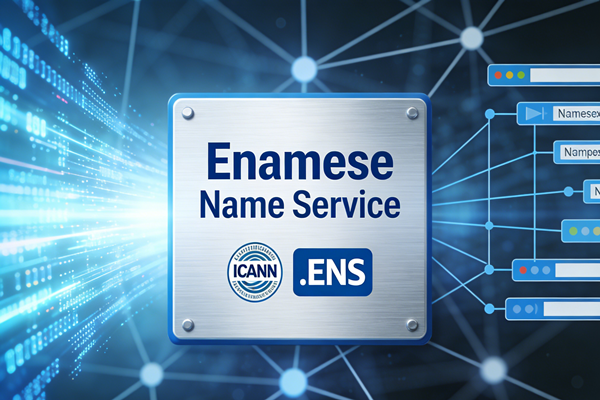
The entire process is extremely difficult and lengthy for obtaining an ICANN top-level domain name, demanding exceptional financial, technical, and compliance capabilities from the applicant. ENS, with its thorough preparation, professional partners, and clear ecosystem planning, possesses the core strengths to successfully obtain an .ENS domain. We will continue to monitor the application progress and provide you with the latest updates.
DN.news Committed to providing fair and transparent reports. This article aims to provide accurate and timely information, but should not be construed as financial or investment advice. Due to the rapidly changing market conditions, we recommend that you verify the information yourself and consult a professional before making any decisions based on this information.